
A Scattered Empire
How the Normans made Europe

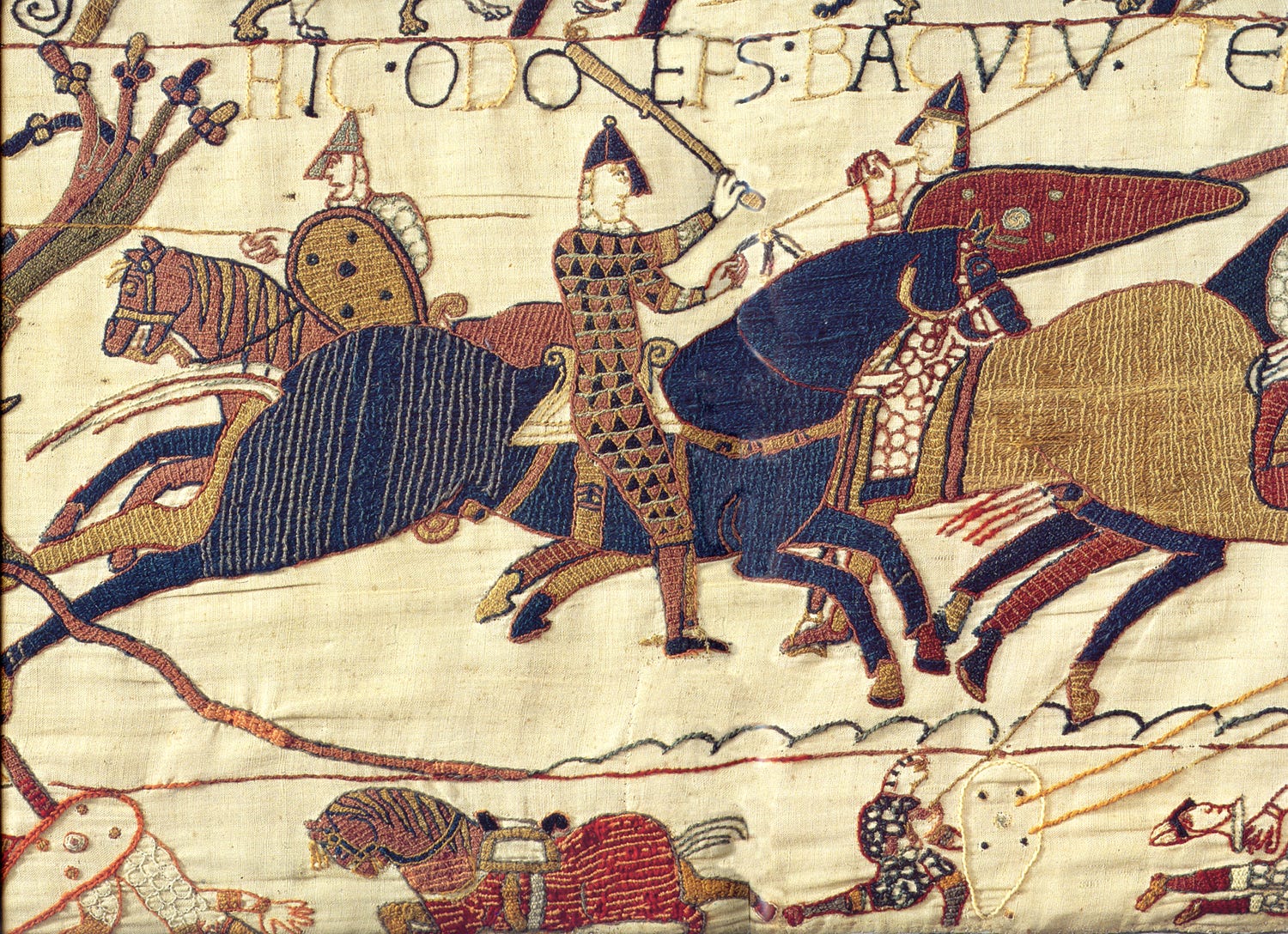
Image: The Bayeux Tapestry (c.1070). Bishop Odo rallies the Norman army during the Battle of Hastings, 1066. Musée de la Tapisserie de Bayeux, France.
When William of Apulia described the Normans as “a people greedy for profit and power,” he simultaneously condemned them and highlighted their driving ambitions. Between the years 1000 and 1300, a dynasty of Viking settlers, baptized into Latin Christendom, remade the geography of Europe. From the cathedrals of Rouen and Durham to the palace of Palermo or Carrickfergus castle in Ireland, they created a network of power that historians still struggle to quantify. Was it an empire? A series of disjointed conquests? Or was it something more elusive: a civilisation bound by the persistent ambition of its rulers?
Keep reading with a 7-day free trial
Subscribe to Consequences: History to keep reading this post and get 7 days of free access to the full post archives.